View Interview

Interview

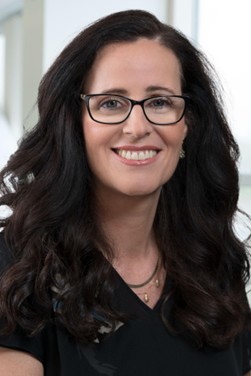
Stephanie Crook
Stephanie Crook
Vice President, Org and Talent Capability, Intel Corporation

Stephanie Crook is Vice President and Director of Organization & Talent Capability at Intel Corporation.  She is responsible for building talent strategies and solutions in support of Intel’s business execution.

An accomplished Organizational Development professional, Stephanie has over twenty years of experience leading cross-organizational transformation projects both in and outside Intel.  Throughout her career, she has maintained close ties to thought leaders in the organizational development, talent, and strategy fields and is known for bringing industry best practices to the teams she leads.

Stephanie holds a bachelor’s degree in psychology and Russian from Utah State University and a master's degree in organizational behavior and business administration from the Marriott School of Management at BYU. 

Q:Many professionals struggle with self-doubt in high-performance environments. How did you build confidence while navigating such demanding roles?
A:Ans: My experience is that everyone questions themselves and / or feels imposure syndrome during their career! It should be expected, especially if you are stretching into new, unknown territory.

My best advice to build confidence is to over-prepare when you are facing something that is hard, and with every small success, you build even greater confidence that you can problem-solve and learn new skills.

It also helps to have a hype team by your side. Find the people who will cheer you on, tell you to keep going, and offer help when you need support. We all second guess ourselves. Knowing that is half the battle to conquer self-doubt.
Q:How did your journey evolve from navigating barriers personally to building systems that support others in their careers?
A:The foundation of my career has been to employ learning principles. I’ve stayed curious and open to try new roles that feel a bit uncomfortable, built a network, and kept current on industry and HR best practices (70/20/10 model).

When I had the opportunity to build systems to support others’ careers, I applied the same principles. We have built learning, performance, and leadership systems that make it more accessible to try on new work without fear of failure and enable coaching, while making learning resources and experiences more effective.

My journey to navigate personal barriers has informed how we design systems with simplicity, fairness, and effectiveness. I’m grateful to have been able to apply learning from my personal career journey to enabling systems to enable others to grow!
Q:What's your favorite thing about working for Intel?
A:That’s easy… our people and culture! Intel hires super-smart people who solve some of the hardest problems and make a real difference in shaping our world. The culture built by our founders continues to foster a rich learning environment where the best ideas win!
Q:What legacy do you hope to leave—as both a leader and someone building systems that enable others to succeed?
A:I hope to bring a legacy of learning. Change will continue to come in faster waves. I would love to continue helping leaders and employees build cultures with supporting structures and systems that enable organizations to effectively learn, adjust, and execute. Learning brings energy, agility, and innovation, all things I want to be known for!
Q:⁠If you could redesign one workplace system for the next decade, what would it be and why?
A:I would love to redesign talent planning systems to be more valid, transparent, and easy to access insights from all levels. There is so much possibly now with AI to rethink how we assess employee skills and potential to empower leaders to make better and faster talent decisions and enable employees to be more empowered to grow their careers. This would result in smarter talent investments, movement, and engagement.