
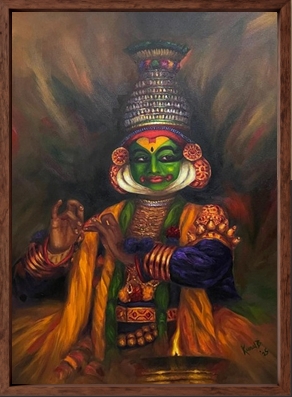
Tales of the Ages
With every gesture, the gods descend,
In every act, the mortal and divine blend
Rama clenched his fists as he restlessly paced the silver beach of Lanka. The beach was still littered with numerous mangled and bloody bodies of soldiers from both sides. A thousand mothers would die without ever seeing their departed sons become fathers. The smell of stale blood intermingled with burnt flesh nauseated him. The setting sun comforted him as if they shared the fate of rising and falling at the same time.
After Ravana had abducted Sita from their peaceful abode in the forest of Panchvati, he had experienced months of depression, anguish and rage. Every leaf and flower of the forest beckoned to him, witnesses to the violence that she had been subjected to. Eventually, he had accepted the situation but only after it had permanently metamorphosed a part of him. Gathering a huge army, he had finally arrived at the beautiful shores of Lanka – the Golden City. He had waged war against Ravana – the most feared even amongst demons, only for her. Sita!
He caught a glimpse of himself in a pool of ocean water, left behind by the receding tide.
Will you recognize me, Sita?… every cell cried out in anguish. He stood differently; his eyes were different. Even he could not help noticing that they had now become hard and cynical.
Unlike my wounded soldiers, I emerge unscathed and yet I am scarred from the very depths of my soul. Will your eyes light up to see me? I suspect that you may not be able to recognize this dark shadow of my older self. What then is to become of us?
The question that he was resisting eventually surfaced – like a piece of wood that had temporarily been submerged under the stormy waters of the sea.
Will I be able to accept Sita as the future queen of Ayodhya? No, that is the wrong question. I am not Sita’s Rama any longer, but Rama the future King of Ayodhya. Will Ayodhya, the righteous city of saints and the wise be able to accept you as their queen? The queen whose reputation has been tarnished for no fault of hers. After all, she had stayed in Ravana’s Lanka for eleven months.
He took a deep breath. Somewhere in Lanka’s Ashok Vatika, she was breathing the same air. This knowledge itself felt intimate, as if the trees and structures between them had ceased to exist. Their divine connection transcended the mortal body – he knew that.
Now that the war had eventually been won, he felt trepidation at the thought of facing his consort, of not meeting her expectations of the gentle love and care that he had showered upon her in the past.
He looked at his reflection again. No! No! I wear the clothes of Rama, but I am not just him. I am the future ruler of Ayodhya, too. Keeping in mind the opinion of my subjects, I will have to ensure that my queen and I are above reproach and gossip, however unfounded it might be.
His hands trembled and his prana waned. Unable to bear the burden of the crown, he slumped on the soft sand, a brief respite.
I will have to ask her to reconsider her position as the queen. I will finally reunite with her only to lose her again. But this time, the sword of fate will have to be wielded by me. So be it! Let me be the villain that even Ravana could not become. So be it!
The audience watched the Kathakali performance enraptured and with heavy hearts, the conflict and agony of King Rama alive in their hearts.
Leadership Lessons
Storytelling in the workplace helps build emotional connect – the magic sauce that inspires performance and commitment. A powerful leader communicates through stories that build trust and connection. It is the golden thread that weaves through the fabric of the organisation to make it strong and durable.
Stories have transcended time, culture and geography. The story of Rama and Sita in Ramayana is remembered millennia after civilizations have risen and perished – replete with infinite insights into leadership, loyalty, and decision-making.
These are ageless and timeless narratives that make a nation strong – where the past leads the present. A nation that has no story is bound to fall, and the one that has many will thrive. It is true – the war of words is also the war of the worlds.
“Stories need telling – else, we will not be able to remember why we do what we do.”
About the Author
Komal Bhanver
Visual Artist and best-selling Author
Komal sees Art as a profound and dynamic force- a source of beauty that carries the power to inspire positive change. Through her work she aims to create art that only engages the senses but also challenges perspectives and encourages growth. She believes that Art is a universal language that transcends boundaries and can be used to foster transformation. He goal is to contribute to a more compassionate and vibrant society. She has authored the book 'The Mauryan' and co-authored the book 'Click!: The amazing story of India's ecommerce boom and where it is headed' both published by Hachette. In the past she has held leadership roles with top tech companies in India. She is now a fulltime artist.
List of Comments
Leave a Comment